Excavation in July 2023







The Location
Excavation in 2022
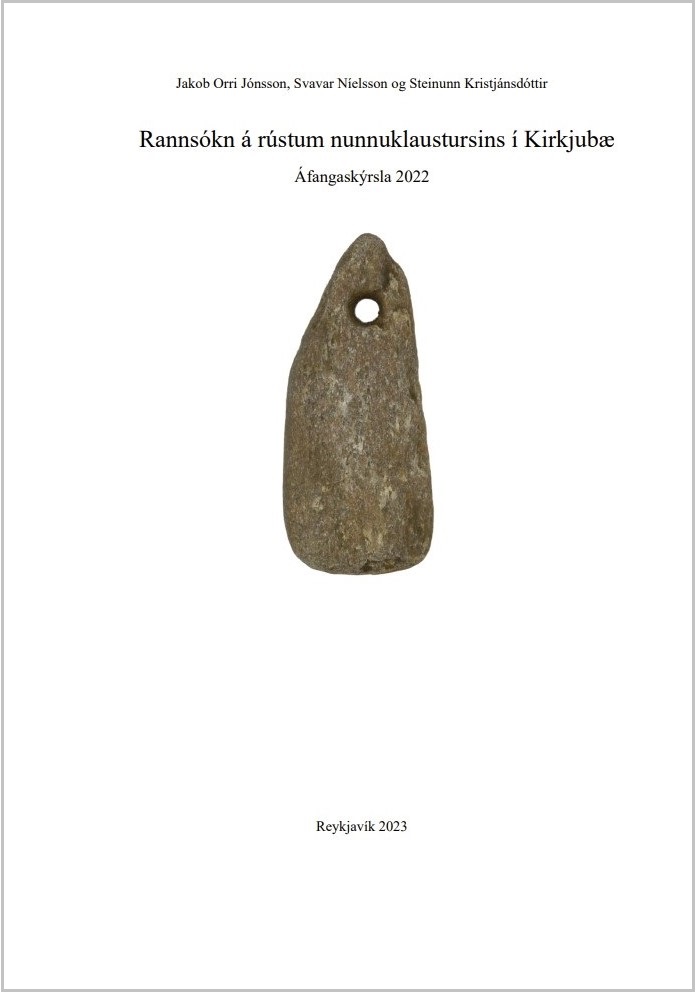
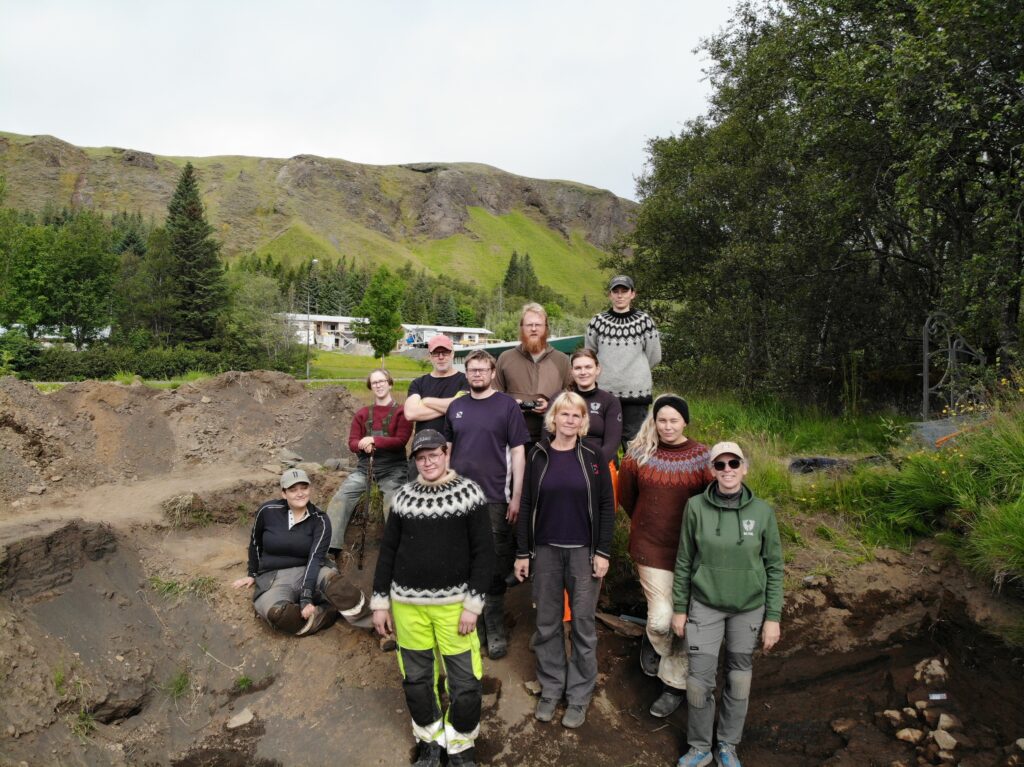
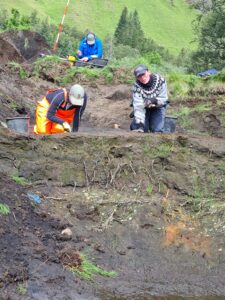
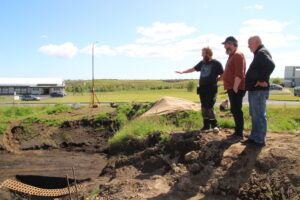
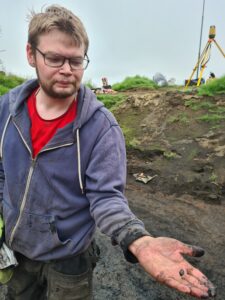
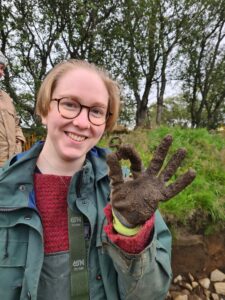
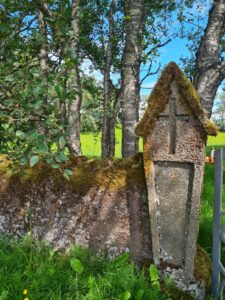
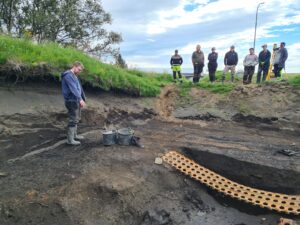
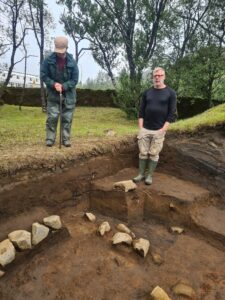
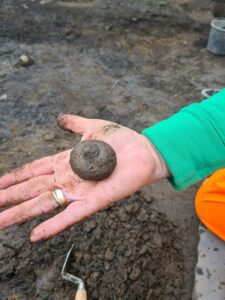
In July of 2022, the project Between Man and Nature, started an excavation on the ruins of the female monastery at Kirkjubæjarklaustur, south Iceland. An earlier archaeological excavation had been undertaken there during the years 2002-2006. This time an excavation area was opened west of an old cemetery in Kirkjubæjarklaustur. The previous excavations had been more north of the cemetery.
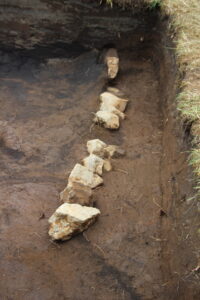
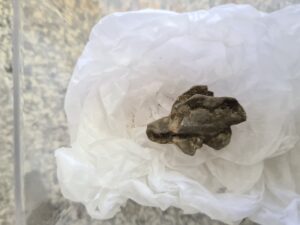
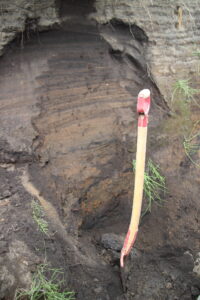
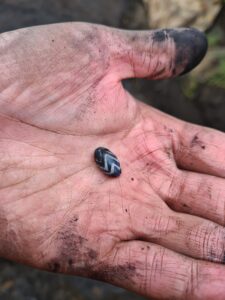
The excavation revealed a midden that accumulated from the time of the monastery and into the 18th century. A turf wall was excavated, that could be date to the 17th or 18th centuries based on artefact typologies. At the end of the excavation this summer, it is still uncertain whether these turf walls were freestanding or a part of roofed buildings.
Previous Excavations
During the excavation at Kirkjubæjarklaustur in 2002–2006, only a small part of the site was excavated, around 140 m² (Mímisson and Einarsson 2008; 2009). Nevertheless, the excavated area revealed much about the life at Kirkjubæjarklaustur, the textile work of the sisters and their religious identities. Although the excavation of the ruins of Kirkjubæjarklaustur covered only one corner of the nunnery’s lodgings, it showed clearly well-preserved evidence of textile work, besides miscellaneous utensils for the household (Mímisson and Einarsson 2009: 49; Parsons 2018). It is also noteworthy that the nunnery had a significantly larger number of sheep than any other monastic house in Iceland when the livestock inventory was compiled for the second time in 1343. By then, the home farm of Kirkjubæjarklaustur had ninety-four cattle and nearly 750 sheep, which were apparently bred to produce wool for the nunnery’s textile production (DI II: 781). In contrast, the other monasteries ran larger cattle ranches, most likely for manufacturing manuscripts besides meat and milk. In fact, the findings supported what may be read from written sources that place primary importance on the nunnery’s textile work, which was officially praised by Bishop Vilchin (r. 1391–1405) during a visitation in 1397. He even purchased tapestries from the nuns to cover all four walls of the so-called large hall in Skálholt episcopal see, as well as several ecclesiastical garments for the cathedral (Lögmannsannáll 1988: 287–288). Moreover, the inventory made in Kirkjubæjarklaustur in 1343 listed a great number of elaborate clothes (DI II: 781; DI VIII: 5). Another inventory from the year 1397 lists enough chasubles for twenty-four priests (DI IV: 238), although there were no more than one or two priests serving the nuns at any time. The extra chasubles may thus have been stock from their textile manufacturing. Embroidered chasubles, gowns, antependia, and tapestries were extremely valuable, as were most other ecclesiastical textiles. An elaborate chasuble, for example, could have a value comparable to that of three or four farms – or one book (Guðbrandur Jónsson 1915–1929: 234). Some of these textiles may be found among preserved textiles in museum collections in Iceland and Denmark, but their origin remains to be investigated.
Moreover, a clear example of saintly devotion mirroring the specific needs and objectives of a monastic house can be seen at Kirkjubæjarklaustur. The patron saint of the nunnery’s church was the Virgin Mary, and the saints’ images and hagiographies recorded in its possession focus principally on women – their work and their position in life – perhaps providing role models that the nuns and other inhabitants could mirror themselves in. In 1343, Kirkjubæjarklaustur owned for example the likenesses of the Virgin Mary and St Catherine of Alexandria, the protector of unmarried girls and schoolchildren, as well as of those working with wheels, such as spinners. When Bishop Vilchin made his formal inspection of the nunnery in 1397, there were two new likenesses of female saints: St Agnes the protector of rape victims, celibacy, and girls in general, and St Cecilia, the protector of musicians and hymns, in addition to likenesses of St Clement, probably one of the early popes; the Apostle St Matthew; and, predictably, Bishop Þorlákur Þórhallsson, who had by then been sanctified by popular devotion in Iceland. Interestingly, one of the most precious books the nuns at Kirkjubæjarklaustur had in their library was Kirkjubæjarbók, which is still preserved today and exclusively contains hagiographies of female saints (Wolf 2011).
Medieval and monastic studies have widely neglected nunneries. As various authors have pointed out in recent years, this is in part due to the fact that nunneries, making up only a small minority of the total of monastic institutions in medieval Europe, tend to get lost in comparison to their male counterparts. Nunneries were often smaller, economically and physically, and isolated from towns and larger settlements.Thus, nunneries have been marginalized or approached as less significant versions of monasteries (Gilchrist 1994; Burton and Stöber 2015; Curran 2019: 523). Furthermore, nunneries have traditionally been understood as deviant from, and thus subordinate to, ‘standard’ monastic forms, which were defined based on patterns in male religious houses. However, as recent studies have shown, nunneries were not deviant but fundamentally different from monasteries and “employed a wide vocabulary of monastic and religious architecture” (Collins 2019a: 281–282; see also Collins 2019b: 27–28).